Amethyst Meaning: Calm, Clarity, and Emotional Stability

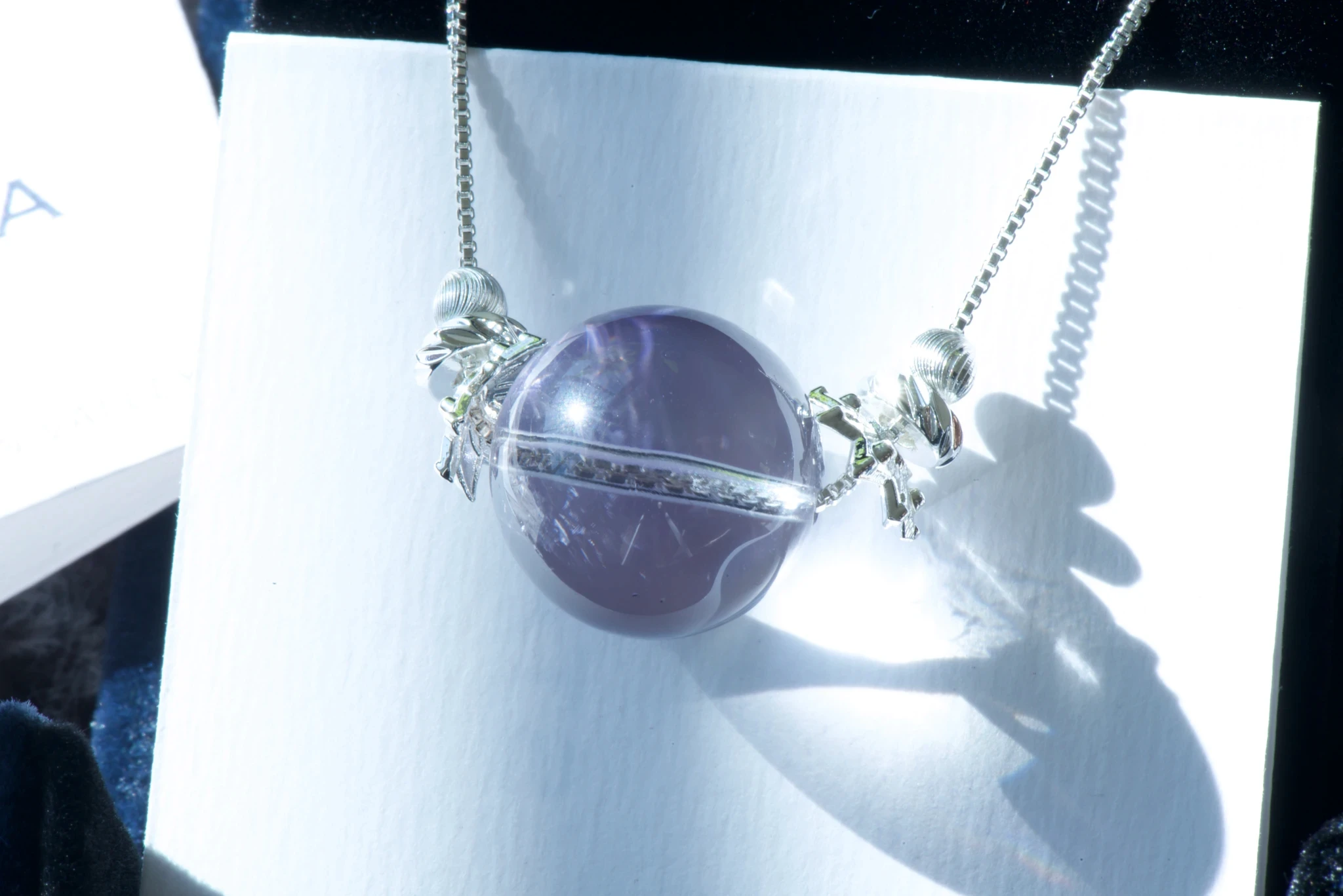
Amethyst Meaning: Calm, Clarity, and Emotional Stability
Amethyst is commonly associated with calm, clarity, and spiritual awareness, but those ideas are often described too vaguely to be useful. A more accurate way to understand amethyst is as a material that supports a steadier internal state by reducing mental noise and emotional reactivity.
This page explains what amethyst is, what it means, what it does, and how its effects typically show up in real situations.
What Is Amethyst?
Amethyst is a purple variety of quartz. Its color comes from natural irradiation and trace iron within the crystal structure. Depending on the conditions in which it forms, amethyst can range from pale lavender to deep violet.
Higher-quality amethyst usually has consistent color, visible depth, and enough clarity to reflect light cleanly. Lower-quality material may appear dull, overly dark, uneven, or cloudy.
In practical terms, this means not all amethyst behaves the same visually. Material quality affects both appearance and how refined the piece feels over time.
Amethyst Meaning
The meaning of amethyst is most often connected to calm, clarity, and emotional stability.
Rather than creating a new state, amethyst is commonly used to support a clearer relationship with existing thoughts and emotions. In situations where the mind feels noisy or reactive, amethyst can act as a steady reference point for returning to a calmer baseline.
This is why amethyst is often associated with reflection, restraint, and inner steadiness. Its meaning is less about escape and more about creating space between what is happening and how a person responds.
Amethyst Spiritual Meaning
The spiritual meaning of amethyst is usually connected to awareness and discernment.
In practical terms, this means the ability to observe thoughts, emotions, and reactions without being immediately overtaken by them. Amethyst is often used when someone wants to feel less pulled by mental noise and more connected to a stable inner perspective.
This does not require a dramatic interpretation. The spiritual meaning of amethyst can be understood as a clearer connection between attention, emotional regulation, and self-awareness.
Amethyst Benefits
Amethyst is commonly used for its calming and stabilizing qualities.
Typical benefits include:
Reduced emotional reactivity during stressful moments
Greater clarity when thoughts feel scattered
A steadier internal baseline throughout the day
More space before responding to difficult situations
Support for reflective thinking and intentional behavior
These effects are usually subtle. Amethyst is not typically used for immediate or dramatic change. Its value comes from repeated exposure and the way that consistency reinforces a calmer internal pattern over time.
What Does Amethyst Do?
Amethyst functions as a consistent reference point for calm and clarity.
In practice, this often shows up as a small pause between stimulus and response. A stressful message, a difficult conversation, or a moment of mental overload may still create a reaction, but the reaction can feel easier to observe before acting on it.
This mechanism is not forceful. Amethyst does not override thoughts or emotions. Instead, it supports the repeated habit of returning attention to a steadier state.
Purple Amethyst Meaning
The purple color of amethyst is often associated with reflection, awareness, and higher-order thinking.
From a practical perspective, this symbolism connects to how amethyst is used: to support clarity when the mind feels crowded, and to help create a more stable relationship with internal experience.
The color adds symbolic depth, but the practical meaning remains the same. Amethyst is most useful when it supports calm attention and steady response patterns.
Amethyst Birthstone Meaning
Amethyst is traditionally known as the birthstone for February.
As a birthstone, it is commonly associated with protection, steadiness, and clear awareness. These meanings align with the broader use of amethyst as a stone connected to calm and emotional balance.
For someone born in February, amethyst can function as both a symbolic marker and a practical reminder of steadiness under pressure.
Who Should Wear Amethyst?
Amethyst is often chosen by people who want more calm and clarity in daily life.
It may be especially useful for someone who wants:
Less reactive communication
A steadier emotional baseline
More clarity during mentally demanding situations
A physical reminder to pause before responding
A calmer transition into rest or reflection
The best fit is usually someone who does not want a dramatic object, but a consistent one. Amethyst works best when it becomes part of a daily rhythm.
Amethyst Necklace Meaning
An amethyst necklace turns the meaning of the stone into something practical.
Worn close to the body, it keeps the material present throughout the day. This makes the necklace more than decoration. It becomes a visible and physical reference point for calm, clarity, and emotional steadiness.
In this context, the object is not separate from the meaning. It is the way the meaning is applied consistently.
How to Use Amethyst
Amethyst is most effective when used consistently. It can be worn, held during moments of stress, used during meditation, or kept nearby during rest.
The key factor is repetition. Its effect comes less from a single moment and more from the steady presence of the stone over time.
Further Reading
For practical application, see:
How to Use Amethyst for Calm, Clarity, and Daily Stability
For choosing a wearable form, see:
How to Choose an Amethyst Necklace
Written by Li Qian, who studies crystal structure, material quality, and their practical use in daily life.