How to Choose a Kyanite Necklace (Color, Structure, and Quality)

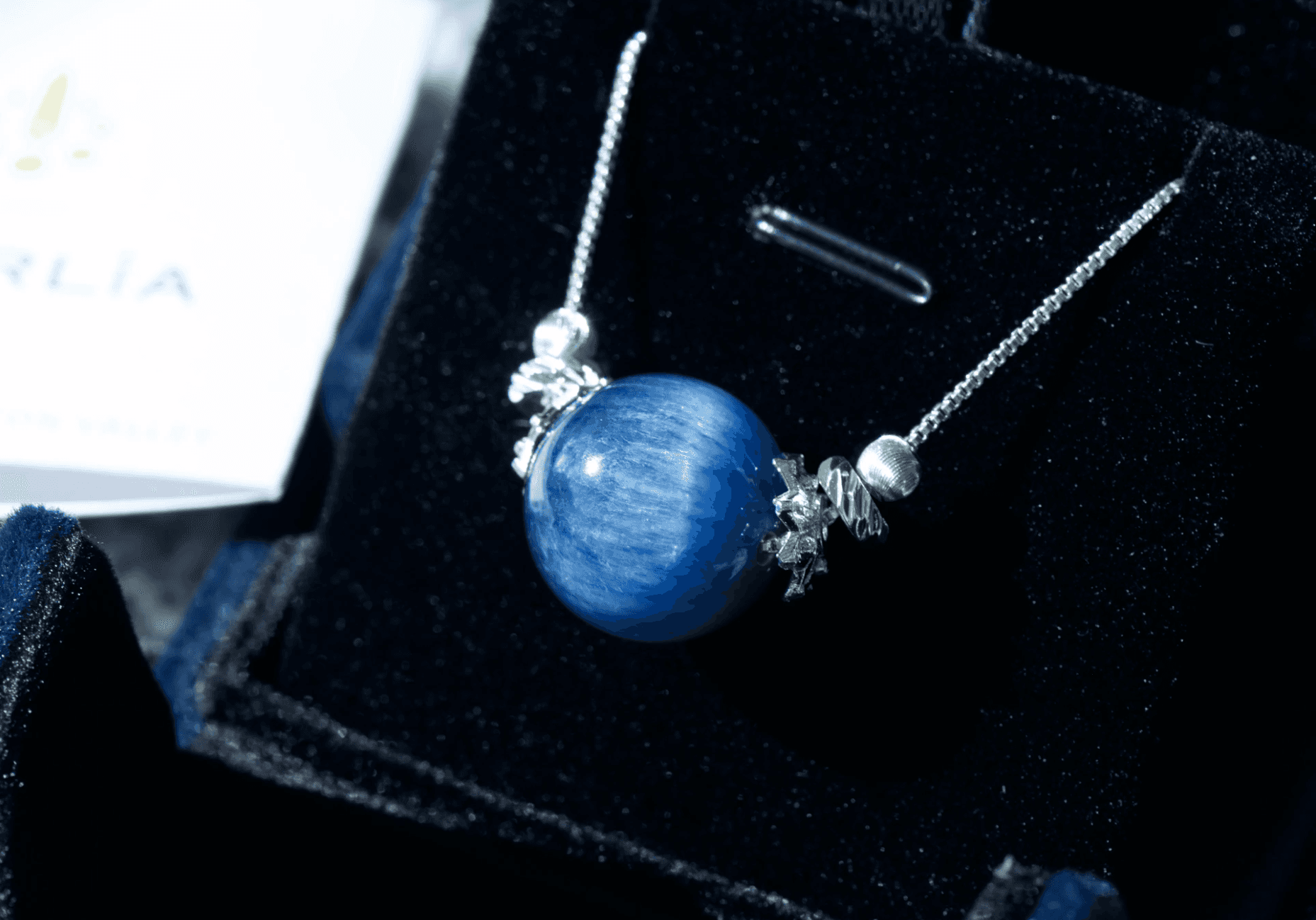
How to Choose a Kyanite Necklace (Color, Structure, and Quality)
Once the meaning and use of kyanite are clear, the next step is choosing a form that supports consistent use.
Not all kyanite necklaces are the same. Differences in color, structure, clarity, and finishing affect both how the piece looks and how reliably it can be worn over time.
This guide outlines what to look for, what to ignore, and how to evaluate a kyanite necklace based on factors that actually matter.
What Matters Most: Color and Structure
The most important factors in kyanite are color and structure.
High-quality kyanite is often defined by:
Color consistency - a clear blue tone without excessive dullness or gray areas
Visible structure - natural blade-like formation that still feels stable and refined
Depth - enough visual variation to show the stone’s internal character
Stability - material that can be finished and worn without feeling fragile
Polish - a surface finish that makes the stone feel intentional rather than rough
Kyanite naturally has lines, texture, and variation. Unlike some gemstones, perfect uniformity is not always the goal. A strong piece should preserve the character of the stone while still feeling wearable and well-made.
Material quality is the foundation. Everything else is secondary.
Blue Kyanite Quality
Blue kyanite is the most recognized form of kyanite, and color is one of the first things to evaluate.
Look for:
A clean blue tone
Minimal dull gray areas
Visible depth in the material
A structure that feels intentional rather than broken
Enough polish to make the stone feel refined
The best blue kyanite does not need to be perfectly even. Natural variation can add depth. The issue is whether the variation feels stable and visually clear, or whether the stone looks muddy, brittle, or poorly finished.
A good piece should feel like the material has been selected and shaped carefully, not simply placed into jewelry without refinement.
Shape and Structure
Kyanite often forms in long, blade-like crystals. This gives the stone a natural directionality.
For daily wear, the shape should feel balanced, secure, and comfortable against the body. A kyanite necklace should preserve the stone’s natural structure without leaving sharp, fragile, or unstable edges exposed.
A strong necklace structure usually:
Preserves the stone’s natural formation
Keeps the design visually balanced
Avoids sharp or uncomfortable edges
Protects the stone during regular wear
Allows the kyanite to remain the central focus
Because kyanite can be more delicate than harder stones, structure matters. A piece that looks interesting but feels too fragile may not be practical for daily use.
Surface Finish and Craftsmanship
The finish of the stone and surrounding elements affects both durability and refinement.
Look for:
Smooth edges
Secure setting or wrapping
Balanced proportions between stone and chain
No loose or unstable points
Clean integration with metal or chain elements
A finish that protects the stone without hiding its structure
Craftsmanship should support the kyanite rather than overwhelm it. The surrounding elements should make the stone easier to wear and understand, not distract from it.
Well-executed craftsmanship is usually subtle. It becomes noticeable over time through comfort, durability, and visual consistency.
Chain Quality and Wearability
A necklace is worn regularly, so the chain matters as much as the stone.
Key factors include:
Durability - resistance to tarnishing or structural weakness
Comfort - appropriate weight and length for daily use
Adjustability - flexibility across different outfits and situations
Balance - the chain should support the stone without pulling awkwardly
Security - clasp and connection points should feel stable
A poorly made chain reduces how often the necklace is worn. That matters because the practical value of a kyanite necklace comes from consistent use.
If the chain is uncomfortable, fragile, or visually disconnected from the stone, the piece becomes harder to integrate into daily life.
Real vs. Low-Quality Kyanite
Not all jewelry labeled “kyanite” meets the same standard.
Common issues include:
Dull or gray coloration
Unstable fragments used as finished jewelry
Rough surfaces without proper finishing
Weak settings or loose wrapping
Stones that feel brittle or poorly selected
Vague material descriptions
While lower-quality pieces may still look similar from a distance, they usually do not maintain the same level of refinement, comfort, or durability.
Verification often comes down to sourcing and transparency. Clear material descriptions and careful craftsmanship matter more than dramatic claims.
What Does Not Matter as Much
Some factors are often overemphasized but have limited practical impact.
These include:
Overly complex symbolic design
Excessive decorative elements
Claims of immediate transformation
Too many added stones that distract from kyanite
Large size without structural stability
These do not improve how the piece functions in daily use.
A simpler, well-made kyanite necklace tends to perform more consistently over time.
Choosing Based on Use, Not Just Appearance
The purpose of a kyanite necklace is not only aesthetic.
For most people, its value comes from consistent wear. This means the best choice is the piece that can be worn regularly without friction.
A necklace may look beautiful but still fail in practical use if it is uncomfortable, fragile, too heavy, or difficult to integrate into daily life.
Practical consistency is the deciding factor.
Kyanite Necklace Meaning
A kyanite necklace turns the meaning of alignment and communication into a daily object.
Worn near the throat and upper body, it becomes a physical reference point for clearer expression, steadier communication, and internal coherence. This makes the necklace more than a decorative item. It becomes a way to keep the meaning of kyanite present throughout the day.
In this context, the object is not separate from the concept. It is the practical way the concept is applied.
A Refined, Consistent Option
The Kyanite Necklace is built around these principles.
Each piece should emphasize selected color, stable structure, and daily wearability. The stone should remain the focus, while the surrounding elements support comfort, durability, and visual balance.
This allows the necklace to function as a reliable, continuous reference point rather than a decorative object that is worn occasionally.
Further Reading
For a deeper understanding, see:
Kyanite Meaning: Alignment, Communication, and Mental Clarity
For practical application, see:
How to Use Kyanite for Clarity, Communication, and Daily Alignment
Written by Li Qian, who studies crystal structure, material quality, and their practical use in daily life.