How to Use Amethyst for Calm, Clarity, and Daily Stability

How to Use Amethyst for Calm, Clarity, and Daily Stability
Understanding what amethyst represents is one step. The next is knowing how to use it in a way that supports consistent daily experience.
The effect of amethyst is not based on a single action. It comes from repeated exposure and practical integration. This page outlines how amethyst is typically used, what to expect, and how to apply it in a way that produces noticeable change over time.
What “Using” Amethyst Means
Using amethyst does not require a specific ritual.
In practical terms, it means placing the material where it can act as a consistent point of reference. The goal is not to activate anything. The goal is to create a repeated cue for calm, clarity, and self-awareness.
This is why passive use, such as wearing it or keeping it nearby, is often more effective than occasional intentional use.
Daily Use: Creating a Steady Reference Point
The most reliable way to use amethyst is through daily exposure.
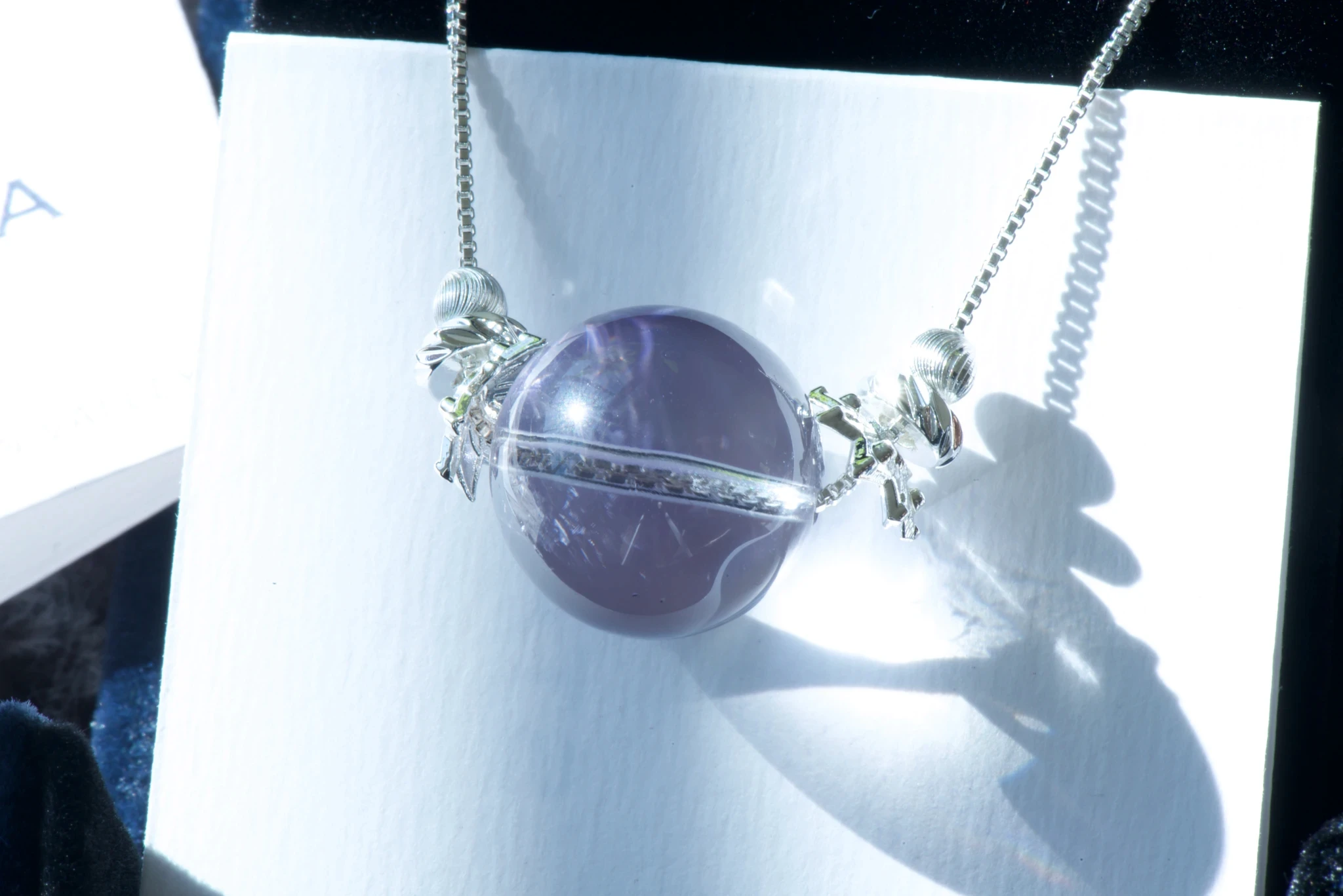
Wearing it as a necklace keeps the material visible and close throughout the day. This allows it to function as a steady reference point without requiring additional effort.
Over time, this consistency may support:
Calmer transitions between tasks
More awareness before reacting
A steadier emotional baseline
Less mental noise during stressful moments
The change is usually incremental rather than immediate.
Using Amethyst During Stress or Overwhelm
Amethyst is often used during moments when thoughts or emotions feel more reactive.
Examples include:
Before difficult conversations
During mentally demanding work
When emotions feel heightened
Before sleep or rest
In these situations, bringing attention to the stone can create a pause between the feeling and the response. This does not remove the reaction, but it can make the reaction easier to observe before acting on it.
Using Amethyst for Meditation
Meditation with amethyst is used to observe internal patterns more clearly.
This can be done by:
Holding or wearing the amethyst
Sitting quietly for a few minutes
Focusing attention on breathing
Noticing where tension or mental noise appears
Returning attention to the body
The purpose is not to force calm. The purpose is to notice what is happening with more clarity. Over time, this increased awareness may reduce the strength of automatic reactions.
Using Amethyst Before Sleep
Amethyst is often associated with rest because it supports a quieter internal state.
Before sleep, it can be used as part of a simple transition routine. This might mean wearing it in the evening, holding it during a short period of stillness, or placing it nearby while preparing for rest.
This does not guarantee better sleep. Its value is in helping create a more consistent transition from activity into stillness.
What to Expect Over Time
Amethyst does not usually produce immediate or dramatic changes.
Instead, its effect is cumulative. With consistent use, people may notice:
Slower emotional escalation
More space before reacting
An easier return to calm
More consistent internal steadiness
These changes often become noticeable only when compared over time.
Common Mistakes in Using Amethyst
There are a few patterns that limit its effectiveness.
1. Using it once and expecting immediate change
Amethyst works best through repetition. A single use is usually not enough to create a noticeable shift.
2. Treating it as a dramatic solution
Amethyst is better understood as a steady reference point, not a forceful intervention.
3. Keeping it somewhere it is rarely seen or worn
If the stone is not present during daily life, it cannot function as a consistent cue.
4. Ignoring consistency
The main factor is repeated exposure. Without consistency, the practical value is limited.
A Practical Way to Use It Daily
For most people, the most effective approach is to integrate amethyst into something already consistent.
A wearable form, such as a necklace, removes the need to remember or initiate use. It allows the stone to remain present throughout the day and become part of an existing routine.
In this context, the object is not separate from the process. It is the method by which the process is sustained.
Further Reading
For the meaning behind the stone, see:
Amethyst Meaning: Calm, Clarity, and Emotional Stability
For choosing a wearable form, see:
How to Choose an Amethyst Necklace
Written by Li Qian, who studies crystal structure, material quality, and their practical use in daily life.